Source Round Laboratory Sample Transport Tube for DNA Extraction, Liquid Storage, and Sampling
Compare 30 round laboratory sample transport tube options from verified Chinese manufacturers. Buyers can evaluate specifications like volume, material, and certifications to find suitable solutions for DNA extraction, liquid storage, and sampling applications.
Key considerations
Products List


Comprehensive Sourcing Guide
Strategic Sourcing Guide for Round Laboratory Sample Transport Tubes
Understanding Technical Specifications and Material Variability
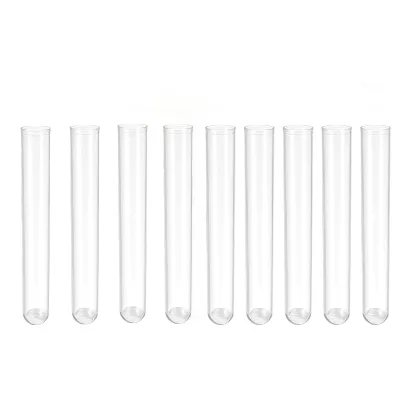
When sourcing round laboratory sample transport tubes, buyers must first navigate a complex landscape of technical specifications that vary significantly between manufacturers. The core product category encompasses a wide range of dimensions, materials, and functional designs. Based on observed market data, the physical form factor often centers on a round bottom shape, which is critical for specific sedimentation and mixing applications. The dimensions are not uniform; for instance, specific models are identified with a tube size of 16x100mm, while other listings indicate a 12x75mm specification. These dimensional differences directly impact the volume capacity, with observed capacities ranging from 5ml to 14ml, and specific model references noting 10ml or even micro-volume capacities like 10-100ul.
Material composition is another primary differentiator that dictates the tube's suitability for various laboratory environments. The market presents options in both plastic and glass. Plastic variants are frequently cited as being made from PS (polystyrene) or PP (polypropylene), with some listings simply categorizing the material as generic "Plastic." Glass options are also available, offering distinct thermal and chemical resistance properties. The choice between these materials often hinges on the intended application, such as RNA/DNA extraction or general liquid storage, where chemical inertness and durability are paramount. Furthermore, the transparency of the tube is a key visual attribute, with options ranging from fully transparent to those featuring colored caps, such as blue, to aid in sample identification.
The structural design extends to the cap and the overall assembly. Buyers should expect variations in cap types, including flat or sharp configurations, which influence the sealing mechanism and ease of use. Some tubes are designed with a scale for volume measurement, while others are explicitly noted as having no scale, relying on external measurement tools. The distinction between disposable and non-disposable units is equally critical. While many modern transport tubes are designed for single-use to prevent cross-contamination, the market also contains listings for non-disposable options, requiring buyers to verify the intended lifecycle of the product before procurement.
Compliance and Certification Verification Protocols
In the laboratory supply chain, compliance is not merely a formality but a prerequisite for operational safety and regulatory adherence. When evaluating potential suppliers for round laboratory sample transport tubes, buyers must rigorously verify the certification status of the products. The market data indicates a prevalence of international standards, with ISO certifications being a common baseline. Specific standards frequently cited include ISO9001 for quality management and ISO13485 for medical device quality management systems, which are essential for products intended for clinical or diagnostic sampling.
Beyond general quality management, regulatory approvals such as CE (Conformité Européenne) and FDA (Food and Drug Administration) compliance are often highlighted in product listings. These certifications suggest that the tubes meet specific safety and performance requirements for use in regulated environments. Additionally, environmental compliance is increasingly important, with RoHS (Restriction of Hazardous Substances) certifications appearing in the supply chain data. This indicates that the materials used in the tube manufacturing do not contain specific hazardous substances, aligning with global environmental regulations.
However, buyers must exercise caution when interpreting these certifications. The presence of a certification claim in a product listing does not guarantee that every unit in a specific order meets that standard. It is imperative to request valid, up-to-date certification documents directly from the supplier for the specific batch being purchased. The origin of the product also plays a role in compliance verification. While many products originate from manufacturing hubs in China, such as Jiangsu or Huangyan, the specific regulatory framework of the destination country must be matched against the supplier's certification claims. For instance, a tube certified under ISO13485 may be suitable for medical use, but its acceptance in a specific jurisdiction depends on local regulatory bodies.
Cost Drivers and Pricing Structure Analysis
The pricing of laboratory sample transport tubes is influenced by a multitude of factors, resulting in a wide observed range in the market. Current data suggests a price range from $0.01 to $5.29 per unit, though this variance is heavily dependent on the specific configuration, material, and order volume. The primary cost driver is the material type; glass tubes typically command a higher price point than their plastic counterparts due to the raw material costs and the more energy-intensive manufacturing process. Similarly, specialized materials like high-grade PP or PS may carry a premium over generic plastic options.
Order volume is the second most significant factor affecting unit cost. The market exhibits a broad Minimum Order Quantity (MOQ) range, spanning from as low as 1 unit to as high as 100,000 units. This flexibility allows buyers to tailor their procurement strategy based on immediate needs versus long-term stockpiling. Small orders, often in the range of single digits or hundreds, will naturally carry a higher per-unit cost due to the fixed overheads of production and logistics. Conversely, bulk orders can leverage economies of scale to reduce the unit price significantly.
Packaging requirements also contribute to the overall cost structure. Standard packaging might involve 500 pieces per bag with 10 bags per carton, or 100 tubes per pack with 10 packs per case. However, specialized packaging, such as color boxes or custom cardboard inserts, adds to the manufacturing and material costs. Customization services, including OEM (Original Equipment Manufacturer) and OBM (Original Brand Manufacturer) support, are available but will inevitably increase the price. Buyers should be aware that the "sample for free" offers sometimes seen in listings are typically limited to small quantities and do not reflect the cost of the full production run.
Typical Applications and Functional Requirements
The versatility of round laboratory sample transport tubes makes them suitable for a diverse array of scientific and medical applications. The primary function identified in the market is for sampling, which encompasses the collection and temporary storage of biological fluids. Specific applications include the extraction of RNA and DNA, where the tube material must be free of nucleases and capable of maintaining sample integrity during transport. The volume capacity of the tube is a critical factor here; 14ml tubes are often used for larger sample volumes, while 5ml or 10ml tubes are preferred for smaller, more precise aliquots.
In addition to nucleic acid extraction, these tubes are utilized for general liquid storage. The choice between disposable and non-disposable options often depends on the nature of the storage. Disposable tubes are preferred for single-use scenarios to ensure sterility and prevent cross-contamination between samples. Non-disposable options may be selected for long-term storage where the tube can be cleaned and sterilized for reuse, provided the material allows for such processes. The sterile status of the tube is another variable; some products are supplied sterile, while others offer optional sterilization, requiring the buyer to specify their needs clearly.
The physical design of the tube also supports specific handling requirements. The round bottom shape is particularly advantageous for centrifugation, as it allows for the efficient sedimentation of particles at the bottom of the tube. The cap design, whether flat or sharp, influences the ease of pipetting and the security of the seal during transport. For applications requiring visual identification, tubes with blue caps or transparent bodies with no scale markings facilitate quick sorting and analysis. The application scope extends from basic research to clinical diagnostics, necessitating a thorough understanding of the specific workflow requirements before selecting a product.
Supplier Evaluation and Origin Considerations
Evaluating suppliers for laboratory sample transport tubes requires a holistic approach that considers geographic origin, manufacturing capabilities, and customization support. The supply chain data indicates that major manufacturing hubs are located in China, with specific regions like Jiangsu and Huangyan being prominent sources. These regions have established ecosystems for plastic and glass manufacturing, offering a competitive advantage in terms of production capacity and cost efficiency. However, the geographic origin should not be the sole determinant of supplier quality; buyers must verify the specific factory's track record and quality control measures.
Customization support is a key differentiator among suppliers. Many manufacturers offer OEM services, allowing buyers to brand the tubes with their own logos or specifications. Some suppliers also provide OBM support, offering fully branded solutions. The availability of customization, such as color options or specific cap designs, indicates a flexible manufacturing process. Buyers should assess the supplier's ability to meet specific model numbers, such as DF013, TP01-0101, or YCS01-80UL, which may correspond to proprietary designs or industry-standard specifications.
When evaluating suppliers, it is crucial to look beyond the basic product listing. The presence of certifications like ISO and CE suggests a commitment to quality, but the depth of the supplier's quality management system should be verified. Suppliers that explicitly mention standards like ISO9001 and ISO13485 are likely to have more robust processes in place. Additionally, the ability to provide samples for free or at low cost can be a valuable tool for initial quality assessment. Buyers should request samples to test the physical properties, such as the clarity of the plastic, the integrity of the seal, and the accuracy of the volume markings, before committing to a large order.
Quality Control and Long-Term Procurement Strategies
Ensuring consistent quality in laboratory sample transport tubes requires a proactive approach to quality control (QC) and long-term supplier relationship management. The observed product attributes, such as "Good" quality ratings and specific material compositions, serve as baseline expectations, but they do not guarantee uniformity across all batches. Buyers should implement a rigorous QC protocol that includes incoming inspection of samples for dimensional accuracy, material integrity, and packaging consistency. The presence of a "No Scale" or "Scale" attribute must be verified physically, as visual inspection alone may not detect subtle deviations in volume markings.
Long-term procurement strategies should focus on building a reliable supply chain that can adapt to changing laboratory needs. This involves establishing clear communication channels with suppliers regarding lead times, production capacity, and quality assurance protocols. While specific lead times are not universally defined in the market data, buyers should negotiate clear timelines to ensure timely delivery, especially for critical applications like RNA/DNA extraction where sample integrity is time-sensitive. The ability to scale orders from small MOQs to large volumes of 100,000 units is a valuable asset for growing laboratories.
Sustainability and environmental compliance are becoming increasingly important in long-term procurement. The availability of RoHS-certified products indicates a move towards environmentally friendly materials. Buyers should prioritize suppliers who demonstrate a commitment to reducing waste and using sustainable packaging, such as recyclable cardboard or optimized bagging techniques. Furthermore, the distinction between disposable and non-disposable tubes should be aligned with the laboratory's waste management policies. By selecting the right balance of disposable and reusable options, laboratories can optimize their operational costs while maintaining high standards of safety and quality.
Comparative Analysis of Product Attributes
To facilitate informed decision-making, the following table summarizes the key attributes observed in the market for round laboratory sample transport tubes. This comparison highlights the variability in specifications that buyers must consider when selecting the right product for their specific needs.
| Attribute Category | Observed Variations | Key Considerations for Buyers |
|---|---|---|
| Material | PS, PP, Plastic, Glass | Select based on chemical resistance and thermal stability needs. |
| Dimensions | 12x75mm, 16x100mm | Match tube size to sample volume and centrifuge rotor compatibility. |
| Volume Capacity | 5ml, 10ml, 14ml, 10-100ul | Ensure capacity aligns with the volume of samples to be collected. |
| Bottom Shape | Round | Essential for sedimentation and efficient sample recovery. |
| Cap Type | Flat, Sharp, Blue Cap | Choose based on sealing requirements and visual identification needs. |
| Disposability | Disposable, Non-Disposable | Determine based on contamination risk and waste management policies. |
| Sterility | Optional, Sterile | Verify sterility status for sensitive applications like DNA extraction. |
| Certifications | ISO, CE, FDA, RoHS, ISO13485 | Confirm specific certifications required for your regulatory environment. |
| Packaging | 500pcs/bag, 100 tubes/pack, Color Box | Assess packaging for storage efficiency and protection during transit. |
| Customization | OEM, OBM, Color Customization | Evaluate supplier flexibility for branding and specific design needs. |
By carefully analyzing these attributes and understanding the underlying market dynamics, buyers can make strategic procurement decisions that ensure the reliability, safety, and efficiency of their laboratory operations. The diversity of options available allows for tailored solutions that meet the unique requirements of various scientific and medical applications.
FAQs
What certifications do these tubes typically hold?
These tubes commonly hold ISO, CE, and RoHS certifications. Some listings also specify ISO9001, ISO13485, and FDA compliance for medical device quality management systems. Buyers should verify specific batch documents directly from the supplier.
Which materials are used for round laboratory sample transport tubes?
Tubes are manufactured from PS, PP, or glass materials. Plastic variants offer options like transparent bodies with blue caps, while glass provides distinct thermal resistance. The material choice depends on applications like RNA extraction or general liquid storage.
How is the packaging configured for bulk orders?
Standard packaging often includes 500 pieces per bag with 10 bags per carton. Other configurations list 100 tubes per pack with 10 packs per case. Custom packaging options like color boxes or cardboard inserts are available upon request.
Can buyers request customization for these tubes?
Yes, OEM and OBM customization support is available for these products. Buyers can request specific colors, cap types, or branding. Customization services may affect the final unit price and require confirmation of specific model numbers.
What are the typical dimensions and capacity options?
Common specifications include sizes like 16x100mm or 12x75mm with capacities ranging from 5ml to 14ml. Some models offer micro-volume capacities like 10-100ul. The bottom shape is typically round to facilitate sedimentation during centrifugation.
Where are these tubes primarily manufactured?
Major manufacturing hubs are located in Jiangsu and Huangyan, China. These regions provide established ecosystems for plastic and glass production. Buyers should verify the specific factory location and origin details for each order.